Rugged Look for Men: How to Dress Rugged Without Looking Sloppy
How to get a rugged look: the jeans, shirts, jackets and boots that build it, earth-tone colors, outfit ideas and the mistakes that make it look sloppy.


We may earn a commission when you buy through links on this page, at no extra cost to you. How we earn money
In this guide
- How Do You Get a Rugged Look?
- What Is Rugged Style?
- The Rugged Style Formula
- Rugged Shirts Every Man Should Own
- The Best Pants for a Rugged Look
- Rugged Jackets and Outerwear
- The Best Boots for Rugged Style
- Rugged Outfit Ideas for Men
- Rugged Gentleman Style
- Rugged Accessories
- Rugged Style Mistakes to Avoid
- FAQs
To get a rugged look, build outfits from durable workwear pieces: dark straight-leg jeans, a flannel, denim or henley shirt, a canvas, leather or corduroy jacket, and leather boots, all in earth tones. Rugged style is built on durable fabrics, practical layers, boots, denim, leather, flannel, and earth tones. The look comes from workwear and outdoor clothing traditions: pieces originally made to function in demanding conditions. In modern use it means wearing those same pieces in everyday contexts: straight jeans, a flannel or denim shirt, a canvas or leather jacket, and solid boots. A leather jacket has to fit close through the shoulders and body, so check your size with the leather jacket size calculator before you buy.
Getting it right means the outfit looks intentional, not accidental. Clean boots. A beard that is trimmed, not wild. Clothes that fit properly. The difference between rugged and sloppy is whether someone made a decision or just got dressed.
Table of Contents
How Do You Get a Rugged Look?
A rugged look comes from the pieces, not from a costume. Five steps get you there:
- Start with dark straight-leg jeans or sturdy twill trousers. Not skinny, not ripped.
- Add a shirt with weight: flannel, denim, chambray, a henley or a thick cotton tee.
- Layer a hard-wearing jacket: a canvas chore coat, a brown leather jacket, a denim or corduroy jacket.
- Finish with leather boots: lace-up work boots, chukkas or Chelsea boots with a solid sole.
- Keep it clean: clothes that fit, conditioned boots and a trimmed beard. That’s the line between rugged and sloppy.
Each step is covered in detail below, with outfits you can copy.
What Is Rugged Style?
Rugged style draws from three main sources: American workwear, military surplus, and outdoor or hunting gear. The pieces that came out of those traditions (flannel shirts, denim, canvas jackets, leather boots, waxed cotton) became popular in civilian dressing because they worked and they lasted.
The modern rugged look uses those same pieces without the literal function. You’re not chopping wood. But a canvas chore coat, dark straight-leg jeans, and leather work boots in a clean, fitted version is still a rugged outfit. The pieces have enough of the original DNA that the look reads right.
Rugged style sits between full casual and smart casual. A plaid flannel shirt and dark jeans with boots is rugged. Swap the flannel for an Oxford shirt and add loafers and the same jeans become smart casual. Rugged is anchored in the fabric and silhouette, not the occasion.
The Rugged Style Formula
Three elements create a rugged outfit. You don’t need all three at once, but most good rugged looks have at least two.
1. A textured or sturdy shirt: Flannel, denim, chambray, henley, or a plain thick cotton tee. The shirt establishes the base. It should have weight to it.
2. A substantial outer layer: Canvas jacket, leather jacket, corduroy jacket, wool coat, or tweed sport coat. This is where rugged style shows its character. The jacket should look like it could handle real weather.
3. Boots: Lace-up work boots, chukka boots, or Chelsea boots. Not fashion sneakers. The boots anchor everything and give the look its weight.
Combine any two of these with the right trouser and the outfit reads rugged. All three together is the complete look.
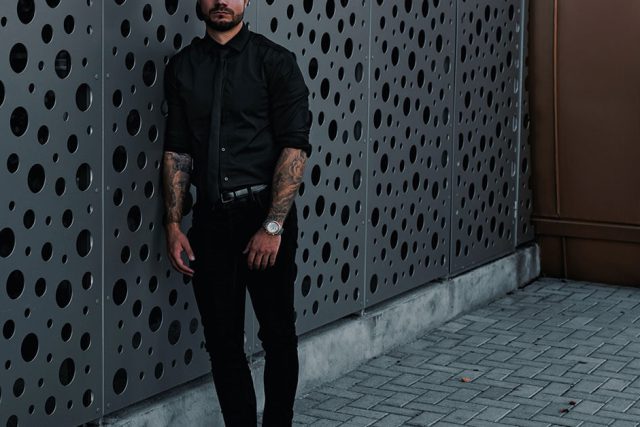
Color logic: Earth tones work best. Brown, tan, olive, dark navy, charcoal, grey, burgundy, camel, and off-white. Avoid bright or saturated colors. They work against the natural, functional feel of rugged style. Black works, but use it deliberately. An all-black outfit built from rugged pieces (black flannel, black jeans, black leather jacket, black Chelsea boots) is a valid rugged interpretation.
Rugged Shirts Every Man Should Own
Flannel plaid shirt: The most identifiable rugged piece. Buffalo plaid, gun club check, or simple two-color plaid in navy, red, black, or olive. Wear it over a plain white or grey tee, rolled sleeves for warmth or unrolled. The fit should work at the shoulders: not baggy, not tight across the chest. Flannel shirts also layer well under a canvas or wool jacket. More outfit ideas in the men’s flannel guide.
Denim shirt: In blue, grey, or black. Wear it open over a white or grey tee as a light jacket in warm weather, or buttoned and tucked for a more deliberate look. Heavy denim shirts have enough structure to stand alone; lighter ones work better as a layer.
Chambray shirt: Similar look to denim but lighter. Better for spring and summer. Works with dark jeans and boots without feeling overdressed. Good for warm-weather rugged looks. More summer ideas in the men’s summer fashion guide.
Henley: A plain henley in off-white, grey, burgundy, or olive. One of the simplest and most useful rugged base pieces. Wear it under a canvas jacket or as a base layer under a flannel. Works in any weather.
Plain thick cotton tee: White, grey, or dark navy. Used as a base layer under a flannel or jacket, or alone in summer with jeans and boots. The fabric weight matters. Thin tees look too casual, while a thick jersey tee holds its shape and looks more deliberate.
The Best Pants for a Rugged Look
Straight or relaxed straight-leg jeans: Dark indigo, mid-wash, or black denim. Not skinny, not wide-leg, not heavily distressed. Some worn-in fading is natural with rugged style, but rips and heavy distressing look costume-like rather than authentic. Boot-cut works if the boots are heavy enough to balance it.
Tweed or wool trousers: For the rugged gentleman version. Grey or brown tweed pairs with a plaid shirt, leather boots, and a tweed or canvas jacket. One of the strongest combinations in rugged style.
Khaki twill trousers: Versatile and easy to style. Dark brown leather jacket + grey or white tee + khaki trousers + tan boots is a clean rugged combination. More khaki outfit formulas in the khaki pants guide.
Chinos: For occasions that lean toward rugged gentleman. Olive or stone chinos with a denim shirt and leather Chelsea boots sit between rugged and smart casual. See what shoes to wear with chinos for more pairings.
Chino or denim shorts: For warm weather casual. Keep them above the knee. Chino shorts in khaki or olive with a plain tee and chukka boots or leather sandals. No cargo shorts, no athletic shorts. More ideas in the men’s shorts outfit guide.
Rugged Jackets and Outerwear
The jacket is often the strongest piece in a rugged outfit. Choose one that looks like it means something.
Canvas chore coat or field jacket: The most workwear-accurate outerwear in rugged style. Usually in olive, tan, or waxed navy. Patch pockets, sturdy construction, not too fitted. Wear over a flannel or henley with dark jeans and boots. Probably the most underused piece in this style. It does the same work as a denim jacket but reads more specifically rugged.
Leather jacket: The A-2, cafe racer, or biker silhouette all work. Brown leather is more rugged and natural-looking than black. Wear over a plain tee or henley with dark jeans and boots. A vintage or worn-in leather jacket reads more authentically than a brand-new fashion version. A leather bomber is another rugged option; the bomber jacket guide covers how to wear one.
Denim jacket: Dark or mid-wash. Wear over a flannel shirt (the double denim combination works if the shades are clearly different) or over a plain tee. Keep the fit close: not tight, but not boxy.
Corduroy jacket: In clay, tan, camel, or olive. A mid-weight jacket that adds texture. Works over a polo, a plain tee, or a light flannel. Less structured than a sport coat, more interesting than a plain cotton jacket.
Tweed sport coat: The rugged gentleman option. Brown or grey herringbone tweed with a denim shirt, dark jeans, and leather boots moves the outfit toward rugged gentleman without losing its identity.
Wool overcoat: For cold weather. A camel or charcoal wool overcoat over a flannel, dark jeans, and boots is a strong winter rugged look. Keep everything underneath simple so the coat does the work.
The Best Boots for Rugged Style
Boots are the piece that most strongly signals rugged style. The wrong footwear (fashion trainers, loafers, thin-soled Chelsea boots) undermines everything above them.
Lace-up work boots: The most authentic rugged footwear. Tan, brown, or dark brown leather with a Goodyear-welt or similar construction. Heavier silhouette. Works with dark straight-leg jeans, canvas jackets, and flannel shirts. The style most associated with traditional workwear and rugged style.
Chukka boots: Two or three-eyelet ankle boots in suede or leather. Sand, tan, or dark brown suede is most versatile. Slightly less heavy than work boots, which makes them easier to wear across more situations. Good with both chinos and jeans.
Chelsea boots: The most wearable rugged boot. Elastic side panels, no laces. Brown or dark brown leather. Works with dark jeans, chinos, and even tweed trousers. Easier to wear into smart casual territory than work boots.
Leather-soled or rubber-soled Derby shoes: For the rugged gentleman angle. Brown brogues or plain Derby shoes with tweed trousers and a sport coat.
Avoid: fashion sneakers, white trainers, dress shoes with thin soles. These conflict with the weight and intention of rugged clothing.
Keep boots clean and conditioned. Dirty or cracked leather undermines the whole outfit. Rugged does not mean neglected.
Rugged Outfit Ideas for Men
Weekend casual: White henley + dark straight-leg jeans + tan leather work boots + canvas field jacket in olive. No styling required. The pieces do the work.
Autumn layered: Grey plain tee + open navy flannel shirt (worn as a layer) + dark jeans + brown Chelsea boots. Add a canvas or denim jacket on top if the temperature drops. The flannel acts as a mid-layer.
Winter rugged: Chunky grey or burgundy roll neck + dark jeans or tweed trousers + wool overcoat in camel or charcoal + brown leather work boots. Warm, substantial, and clean.
Summer casual: Chambray shirt (worn open over a white tee) + olive chino shorts + leather sandals or chukka boots. Keep both pieces fitted. More summer combinations in the men’s summer fashion guide.
Rugged smart casual: Denim shirt (tucked) + slim olive or stone chinos + brown suede chukka boots + corduroy jacket in tan. Works for a lunch meeting or a casual Friday office. Sits between rugged and smart casual.
All-leather and denim: White thick-cotton tee + dark straight jeans + brown A-2 or cafe racer leather jacket + tan or dark brown lace-up boots. The classic rugged combination. Keep everything clean and well-fitted.
Rugged Gentleman Style
Rugged gentleman is the version of this aesthetic that works for smarter occasions. It takes the fabric and texture of rugged style and combines them with more structured or refined pieces.
The formula: Tweed or corduroy sport coat + denim or chambray shirt + dark jeans or tweed trousers + leather boots or Derby shoes.
Example outfit: Brown herringbone tweed sport coat + light blue denim shirt (open collar) + dark grey straight-leg jeans + dark brown leather Chelsea boots. Looks considered without looking formal.
Another example: Camel corduroy jacket + olive or white roll neck + slim dark jeans + brown suede chukka boots. Layered, textured, and put-together.
What distinguishes rugged gentleman from regular rugged: the jacket is more structured, the shirt is cleaner, and the footwear moves toward Derby shoes or polished Chelsea boots rather than heavy work boots. The earth tones stay the same. More on using smart casual principles to calibrate this in the smart casual dress code guide.
Rugged Accessories
Accessories finish a rugged outfit, but keep it to one or two at a time.
- Leather belt: a wide, plain belt in brown leather with a simple buckle. It should sit close in tone to your boots.
- Field or dive watch: a simple steel watch on a leather, canvas or steel strap. Skip dress watches with thin straps.
- Knit beanie: in charcoal, navy, olive or oatmeal for cold weather.
- Canvas or leather bag: a canvas tote, backpack or leather messenger instead of a nylon gym bag.
Rugged Style Mistakes to Avoid
Skinny jeans: They conflict with the weight of the boots and jackets that anchor rugged style. Straight or relaxed straight is the right cut.
Heavily ripped or distressed jeans: Fading is natural. Rips and heavy distressing read as fashion rather than authentic workwear. If you want the worn-in look, buy vintage or let the wear happen gradually.
Oversized flannel: A flannel that hangs off the shoulders and billows at the sides looks sloppy. Get the shoulder seam right, the same rule as any other shirt.
Too many leather pieces at once: A leather jacket, leather boots, leather belt, and leather accessories in one outfit is too much of the same material. Use one strong leather piece and keep the rest in cotton, denim, or canvas.
Fashion boots with thin soles: A Chelsea or chukka boot with a very thin rubber sole in a fashion silhouette undercuts the rugged look. The boot needs weight and construction to work.
Ungroomed beard: Stubble and a beard work with rugged style. An unkempt, shapeless beard does not. Trim the neckline. Keep the shape clean. Rugged is not the same as not grooming.
Costume styling: A full cowboy outfit (hat, Western shirt, belt buckle, bolo tie) reads as a costume. Rugged style uses individual pieces, not a theme. One strong rugged piece is better than an entire themed outfit.
Dirty or cracked boots: The most visible care failure in this style. Leather boots need conditioning and cleaning. A scuffed pair of boots in a rugged outfit makes it look like you stopped caring halfway through.
FAQs
How do you get a rugged look as a man?
To get a rugged look, wear dark straight-leg jeans, a flannel, denim or henley shirt, a canvas or brown leather jacket and leather boots, all in earth tones like brown, olive, tan and navy. Fit and grooming keep it sharp: clothes in your size, clean boots and a trimmed beard.
What does rugged style mean for men?
Rugged style draws from workwear, military surplus, and outdoor clothing traditions. It uses durable fabrics such as flannel, denim, leather, canvas and wool in straight-cut silhouettes with solid boots. The look is practical and sturdy in its references, even when worn in everyday contexts.
How do you dress rugged without looking messy?
Fit and maintenance. Clothes should be the right size: not baggy, not tight. Boots should be clean and conditioned. The beard should be trimmed. One or two rugged pieces in a well-fitted, maintained outfit reads rugged; the same pieces in poor condition read sloppy.
What colors work best for rugged outfits?
Earth tones: brown, tan, olive, charcoal, dark navy, burgundy, camel, and off-white. These work together naturally and reinforce the functional, natural origin of rugged style. Avoid bright or saturated colors. They conflict with the aesthetic.
Are leather jackets rugged?
Yes. A leather jacket, particularly a brown A-2, cafe racer or biker style, is one of the core rugged pieces. Brown leather reads more naturally rugged than black. Wear over a plain tee or henley with dark jeans and boots.
What shoes work best for rugged style?
Lace-up leather work boots are the most authentic choice. Suede chukka boots are the most versatile. Leather Chelsea boots work across rugged and rugged gentleman combinations. Avoid fashion trainers, thin-soled boots, and dress shoes. They conflict with the weight of rugged clothing.
Can rugged style be smart casual?
Yes, in the rugged gentleman version. A tweed sport coat, denim or chambray shirt, dark jeans, and brown leather Chelsea boots or Derby shoes reads smart casual with rugged character. The fabric and texture stay rugged; the structure and shoe formality move it up the register.
What is rugged gentleman style?
Rugged gentleman combines structured outerwear (a tweed sport coat or corduroy jacket) with rugged base pieces like a denim shirt, dark jeans, and leather boots. It is dressed-up rugged, not dressed-down smart casual. The fabric and color palette stay earthy; the silhouette becomes more considered.