Men’s Style Guide: How to Dress Better
The practical rules of men's style: how clothes should fit, which colours combine easily, what to buy first, and how to build outfits that work together.


We may earn a commission when you buy through links on this page, at no extra cost to you. How we earn money
In this guide
Most men don’t need louder clothes, more trends, or a bigger wardrobe. They need better fit, cleaner shoes, and colors that work together. This guide covers the practical rules: what to buy, how it should fit, which colors combine easily, and how to put actual outfits together. Start here, apply the rules, and most style problems solve themselves.
Table of Contents
The Basic Rules of Men’s Style
Before anything specific, six rules that apply to every outfit:
1. Fit is not optional. The right fit transforms average clothes. Bad fit ruins expensive ones. This is the highest-leverage change any man can make.
2. Buy less, buy better. Ten pieces in good quality that you actually wear beat forty pieces you cycle through randomly. Cheap fabrics pill, lose shape, and fade quickly. Spend more on the pieces you wear most.
3. Keep colors simple. Most men’s style problems come from trying to do too much with color. Neutral colors (navy, white, grey, black, olive, brown, stone) mix with each other without effort. Build around these before adding anything bold, and choose accent colors that suit your skin with the skin tone color finder.
4. Shoes matter more than most men think. A good pair of shoes lifts any outfit. Dirty or cheap-looking shoes drag down even a well-fitted one. Maintain what you own and replace what is past its life.
5. Dress for the occasion. The right outfit for the wrong setting looks worse than a simpler outfit in the right one. Know what the situation calls for before deciding what to wear.
6. Grooming is part of the outfit. A sharp outfit worn by someone with unkempt hair and poor hygiene does not look well dressed. The outfit and the person need to be at the same standard.
Wear Clothes That Fit Properly
Fit is the single most practical section in this guide. Get it right and most other decisions become easier. If you don’t know your sizes, the men’s size calculator works out suit, shirt, pants and shoe sizes from a few measurements.
Shirts and tees: The shoulder seam should sit exactly at the edge of your shoulder, not hanging down the arm, not straining toward the neck. The chest should have room without excess fabric pooling at the sides. When tucked, it should stay; untucked, it should fall just below the hip.
Blazers: Try the blazer on with your arms at your sides and check that the shoulder seam sits at the edge of your shoulder. When fastened, there should be no pulling across the chest. Sleeve length shows about half an inch of shirt cuff below the jacket sleeve. A slight taper at the waist is correct: not tight, but not boxy.
Dress shirts: Should fit close through the body without pulling at the buttons. Slim fit means slim all the way through: a slim shirt that pulls at the chest is too small, not slim. Collar should sit flat against the neck without gaps.
Suits: The shoulder seam is the first check. It should sit at the edge of your shoulder with no roll or drop. Lapels should sit flat against the chest. Jacket length should reach your knuckles when your arms hang at your sides. Trouser hem should have a slight break at the shoe: a small fold, not heavy stacking.
Jeans: Sit at the natural waist. Leg should be slim or straight, not skinny, not wide. Hem should hit the top of the shoe cleanly, with a minimal break. No heavy stacking of fabric at the ankle.
Trousers: Same waist rule as jeans. Flat front, not pleated for most outfits. Slim or straight leg. Clean break at the shoe.
When to tailor: If the shoulders fit but the chest is loose, or the seat fits but the leg is too wide, have it altered. Tapering a trouser leg, taking in a shirt’s sides, and shortening sleeves are inexpensive and make a significant difference. More on building around well-fitted pieces in the men’s capsule wardrobe guide.
Build a Simple Wardrobe First
A small, well-chosen wardrobe creates more outfits than a large random one. These are the pieces worth owning first. What to buy first also depends on your age and work: see how to dress in your 20s, 30s and 40s.
Shirts:
White Oxford button-down: the most versatile shirt you can own. Pairs with jeans, chinos, suits, and shorts. A light blue Oxford is the second purchase.
Plain polo in navy, white, or grey: bridges casual and smart casual without effort.
Plain white and grey crew neck tees in thick cotton: the base of most casual outfits. Avoid thin or boxy fits.
One or two flannel shirts in navy, red check, or grey for autumn and casual layering. More flannel outfit ideas in the men’s flannel guide.
Trousers and jeans:
Slim or straight-leg dark jeans: the most useful casual bottom. No heavy distressing. Dark wash.
Khaki or stone slim chinos: for smart casual and everyday wear. More pairing ideas in the khaki pants guide.
Grey or charcoal dress trousers: for smart casual and business occasions.
Slim chino shorts in navy, khaki, or stone: for warm weather. Above the knee. More in the men’s shorts guide.
Outerwear:
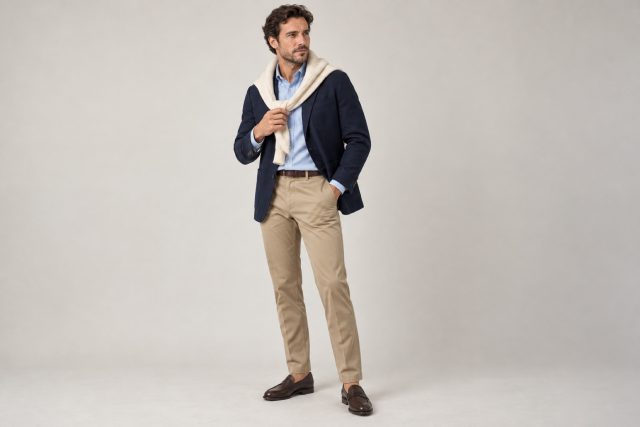
Unstructured navy blazer: the most versatile jacket in men’s clothing. Pairs with jeans, chinos, and trousers. Works for casual through smart casual. See the navy blazer guide for outfit formulas.
Denim jacket: for casual layering over a tee or shirt.
Leather or suede bomber jacket: for casual to smart casual. More in the bomber jacket guide.
Wool overcoat in camel or charcoal: for winter smart casual and business occasions.
Knitwear:
Fine-knit grey and navy crew neck or V-neck sweater: more versatile than most men use. Works over a collared shirt or under a blazer.
Suits:
One grey suit: the most useful suit color. Works for formal occasions, business, and smart events. Pair with white or light blue shirt and dark shoes.
Use Colors That Are Easy to Match
Color is where most men make the same mistake: trying to combine too many shades or choosing pieces that don’t connect.
The neutral foundation: Navy, white, grey, black, olive, stone, khaki, and brown. These are the colors that mix with each other and with almost everything else. Buy most of your wardrobe in these colors.
Color combinations that consistently work:
- Navy + white: The most reliable pairing in men’s clothing. Works at every occasion level.
- Grey + black: Clean monochrome. Works for smart casual and casual.
- Olive + grey or cream: Earthy and easy to combine.
- Brown + navy or white: Warm and deliberate. Good for shoes and jackets.
- Dark denim + any neutral tee: The denim provides enough color, so the tee should stay plain.
- Charcoal + white: Sharp for office and smart casual.
What to be careful with: Bright, saturated colors and loud patterns require more skill to combine. Use one bold piece (a burgundy jacket, an olive shirt) and keep everything else neutral. More on making all-black outfits work in the all-black guide.
Pattern rule: One pattern per outfit. Small checks, thin stripes, or subtle prints work. Large plaids and bold prints compete with each other and with the rest of the outfit.
Shoes Every Man Should Own
Shoes determine the formality of an outfit more than almost any other piece. The wrong shoes undermine a well-put-together outfit; the right shoes complete it.
Brown leather loafers: The most versatile everyday shoe. Works with chinos, trousers, and dark jeans for smart casual. Penny or tassel loafers in tan or cognac. Essential for summer smart casual. More summer shoe options in the men’s summer fashion guide.
Clean white leather sneakers: For casual outfits. Works with dark jeans, chinos, and shorts. Clean them regularly: dirty white sneakers undermine everything above them.
Suede chukka boots: Two-eyelet ankle boots in sand or tan. The most versatile boot for autumn casual and smart casual. Works with both jeans and chinos.
Brown Derby shoes: For smart casual and business occasions. Open lacing makes them more comfortable than Oxfords for long days. Works with grey trousers, chinos, and blazers.
Chelsea boots in brown or black: Works with jeans, chinos, and trousers across casual and smart casual. Good for autumn and winter. One of the most useful boots in a man’s wardrobe.
Brown brogues: Add texture and character to smart casual and business casual outfits. Works with trousers, chinos, and dark jeans.
Shoe maintenance: Polish leather shoes regularly. Treat suede against water. Replace trainers when they look worn. Good shoe care makes mid-range shoes look better than neglected expensive ones.
Accessories That Improve an Outfit
Accessories finish an outfit. The goal is to add a detail, not to create noise.
Leather belt: Should match your shoes in tone. Brown shoes, brown belt. Black shoes, black belt. This is the one accessory rule most men miss: getting it right ties the outfit together; getting it wrong is immediately visible.
Watch: Adds something to any outfit. Leather strap for smart casual. Metal bracelet for formal or business. One watch, not several. Does not need to be expensive. It needs to look clean and appropriate.
Pocket square: For blazers and sport coats at smart casual or formal occasions. White linen or a muted pattern. A simple flat or one-point fold. Does not need to match the tie exactly.
Sunglasses: One clean frame in a classic style: wayfarer, round, or aviator in a neutral color. These work across all outfits and look wrong only when the shape or lens color is very fashion-specific.
Bag: A leather messenger bag or a canvas tote for everyday carry. Avoid backpacks in smart casual settings. The bag should be simple and in good condition: worn straps and broken zips undermine an otherwise sharp outfit.
Keep accessories minimal. One or two deliberate choices is a decision. Five accessories in the same outfit is noise.
Easy Outfit Formulas for Men
These are complete outfit combinations. Each one is built around the rules above.
Casual default: White or grey tee + slim dark jeans + white leather sneakers. The most reliable casual outfit. Add a denim jacket if the weather calls for it.
Casual smart: Plain navy polo + slim stone chinos + brown leather loafers. No jacket needed. Works for a casual lunch or a relaxed occasion where you want to look deliberate.
Smart casual (any occasion): White Oxford shirt (tucked) + slim grey chinos + navy unstructured blazer + brown penny loafers. The most useful smart casual outfit. Covers most dinners, casual offices, and social occasions. More smart casual outfit ideas in the smart casual dress code guide.
Autumn casual: Grey tee + slim dark jeans + open flannel shirt as a layer + suede chukka boots. Easy and textured without overdoing it.
Rugged casual: White henley + dark straight-leg jeans + canvas jacket in olive + tan leather work boots. More outfit formulas in the rugged style guide.
Business casual: Light blue Oxford shirt (tucked) + slim charcoal trousers + navy blazer + brown Derby shoes. Works for most offices and client meetings.
Sharp winter: Black roll neck + slim dark jeans or straight dark trousers + camel wool overcoat + leather Chelsea boots.
Suit outfit: Grey suit + white dress shirt + dark brown Oxford shoes. No tie for smart casual. Tie in navy or burgundy for formal. Keep accessories simple: a watch and a pocket square.
For more outfit ideas by season, the outfits for men guide covers combinations across the year.
Common Style Mistakes to Avoid
Clothes that don’t fit: The most common and most visible mistake. Size down and tailor rather than buying bigger for comfort. Fit fixes more style problems than any individual piece.
Ignoring shoes: Worn, dirty, or cheap-looking shoes are visible immediately. Clean leather and suede regularly. Replace trainers before they look beaten. The shoe tells the room more about effort than most men realise.
Too many graphic tees: A graphic tee as a base layer can work. As the visible centerpiece of an outfit. It limits everything above the waist and reads as low-effort in most settings.
Shiny synthetic fabrics: A shirt in a shiny polyester blend looks cheaper in person than it does on a hanger. Cotton, linen, wool, and suede hold up better and photograph more naturally.
Over-accessorizing: More than two accessories in one casual outfit competes with the clothes rather than adding to them. One watch, one belt. The accessories should finish the outfit, not try to do the outfit’s job.
Matching everything too deliberately: A tie that matches the pocket square that matches the shirt that matches the socks. One coordinating element is enough. Over-matching looks like effort in the wrong direction.
Wearing wrinkled clothes: A sharp outfit in wrinkled fabric looks unfinished. Iron or steam anything that creases before wearing it. This applies more to shirts, blazers, and trousers than to casual tees and jeans.
Dressing for your age from 20 years ago: What worked at 25 may not work at 45. The silhouette, the colors, and the pieces all shift. Slim-straight rather than ultra-skinny jeans. Clean sneakers rather than heavily branded trainers. Simple basics rather than trend-led pieces.
FAQs
How can men dress better?
Start with fit. Get the clothes you already own properly fitted: shoulder seams at the shoulder, trousers breaking cleanly at the shoe, shirts that sit close without pulling. Then build around simple neutral colors: navy, white, grey, black, olive, and brown. Clean shoes and one good blazer solve most remaining style problems.
What clothes should every man own?
A white Oxford shirt. Plain tees in white and grey. Slim dark jeans. Slim khaki or stone chinos. A navy unstructured blazer. A fine-knit grey sweater. Brown leather loafers. Clean white leather sneakers. Brown Derby shoes. Chelsea boots. A leather belt. These pieces cover casual through smart casual and most occasions in between.
What colors are easiest for men to wear?
Navy, white, grey, black, olive, stone, khaki, and brown. These mix with each other without effort. The most reliable combinations: navy and white, grey and black, olive and grey, brown and navy. Add one bolder color (burgundy, rust) as a single piece once the neutral base is established.
How should men’s clothes fit?
The shoulder seam sits at the edge of the shoulder. The chest has room without pulling or excess fabric. Trouser hem has a slight break at the shoe. Jeans sit at the natural waist with a clean leg, not stacked at the ankle. Jacket sleeves show a small amount of shirt cuff. If ready-to-wear fits in one place but not another, tailor it: basic alterations are inexpensive.
What shoes should every man have?
Brown leather loafers for smart casual. White leather sneakers for casual. Suede chukka boots for autumn and smart casual. Brown Derby shoes for business occasions. Chelsea boots in brown or black for autumn and winter. These five cover the vast majority of situations.
How can men look stylish casually?
Plain tee or polo in a neutral color + slim dark jeans or chinos + clean shoes appropriate for the setting. The fit needs to be right on all three pieces. One strong piece (a good jacket, a textured shirt, a solid boot) adds enough interest. The rest should stay simple.
What style mistakes should men avoid?
Bad fit, dirty or worn shoes, loud graphic tees as the main piece, shiny synthetic fabrics, over-accessorizing, matching everything too deliberately, and wrinkled clothes. The biggest mistake is always fit. Fix that first and most other problems reduce significantly.