What Color Tie Goes With a Blue Suit?
The best tie colors for a blue suit, from navy to light blue, with shirt and tie combinations, tie patterns, shoes, and outfits for each occasion.

We may earn a commission when you buy through links on this page, at no extra cost to you. How we earn money
In this guide
- Start With the Shade of Blue
- Best Tie Colors for a Blue Suit
- Best Shirt and Tie Combinations for a Blue Suit
- Tie Patterns That Work With a Blue Suit
- Which Tie Knot to Use With a Blue Suit
- Blue Suit and Tie Ideas by Occasion
- Shoes, Belt, and Pocket Square With a Blue Suit
- Blue Suit Tie Mistakes to Avoid
- FAQs
A blue suit works with more tie colors than any other suit, which is exactly why choosing one can feel harder than it should. The answer depends on the shade of blue, the shirt underneath, and where you’re going: the three things the tie color matcher asks for. This guide covers the best tie colors, shirt and tie combinations, patterns, and outfits for every common occasion.
Table of Contents
Start With the Shade of Blue
“Blue suit” covers a wide range. The shade changes which ties work best and how formal the outfit reads.
Navy: The darkest blue and the most common business suit color. Navy behaves almost like a neutral, so it takes nearly every tie color: burgundy, darker navy, green, brown, gold, and pink. It is formal enough for interviews and serious meetings.
Medium blue: Brighter than navy, sometimes sold as “royal” or “French” blue. It reads more modern and less conservative. Ties need a bit more care here, since bright blues can clash with bright ties. Earthier and deeper colors (burgundy, brown, dark green, rust) work best.
Light blue or powder blue: A daytime and warm-weather suit, often in linen or a light cotton or wool blend. It looks best with soft or mid-tone ties: tan, light brown, navy, soft pink, or olive. Dark, heavy silk ties can look out of place on it.
Blue with a pattern: Blue suits with a pinstripe, chalk stripe, or windowpane check need a quieter tie, usually a solid or a small, tight pattern so the suit and tie aren’t competing.
If you only own one blue suit, it is probably navy, and nearly everything below applies to it. A navy suit is also the one most men’s capsule wardrobes build their office add-ons around.
| Suit shade | Best shirts | Best tie colors |
|---|---|---|
| Navy | White, light blue, pale pink | Burgundy, navy, forest green, brown, gold |
| Medium blue | White, light blue | Burgundy, brown, dark green, rust, navy |
| Light blue | White, pale pink, light gray | Tan, light brown, navy, soft pink, olive |
Best Tie Colors for a Blue Suit
Burgundy: The single best tie color for a blue suit. Deep red against blue gives clear contrast without looking loud, and it works from job interviews to weddings. Solid burgundy silk or burgundy with a small navy pattern are both safe.
Navy: A tonal choice. A navy tie on a navy or medium blue suit looks clean and serious. The trick is to make the tie a different shade or texture from the suit, darker or with a woven pattern, so it doesn’t look like you matched them by accident. A white shirt keeps the outfit from going flat.
Brown: Brown and blue are a natural pair. A chocolate silk tie suits the office; a brown knit or wool tie gives a blue suit a softer, more relaxed look. Brown ties also tie the outfit to brown shoes and a brown belt.
Forest or bottle green: A strong alternative to burgundy. Dark green looks rich next to navy and is less expected than red or blue. It works especially well in autumn and winter.
Gold, mustard, or yellow: Warm yellows are the classic complement to blue. Muted gold or mustard suits daytime events, spring weddings, and offices that allow some color. Bright lemon yellow is harder to wear and best kept for summer.
Pink: A light or dusty pink tie on a navy suit looks fresh, especially with a white shirt. Deeper raspberry or rose works too. It is a good wedding guest option.
Purple or plum: Deep purple is close enough to burgundy to work the same way, with a bit more personality. Keep the shirt plain white or light blue.
Silver or gray: Light silver ties on a navy suit look formal and suit evening weddings and celebrations. Mid-gray is safer for the office and pairs with a light blue shirt.
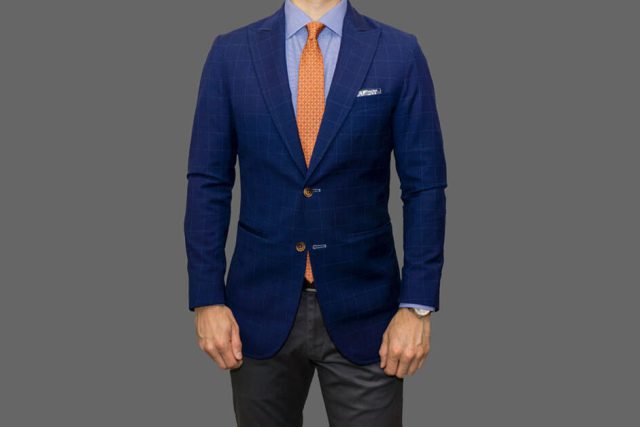
Orange or rust: Burnt orange and rust are complements to blue. They suit a medium or light blue suit in autumn or at a relaxed event. Keep the shade muted rather than bright.
Black: Possible, but rarely the best choice. A black tie on a blue suit can look severe and slightly mismatched. Save black ties for black and charcoal suits.
Best Shirt and Tie Combinations for a Blue Suit
The shirt sits between the suit and the tie, so it decides how much contrast the outfit has. Get the shirt right first, then choose the tie.
White shirt: Works with every tie color on this list. White plus navy suit plus burgundy tie is the most reliable business combination there is. If you are unsure, start here.
Light blue shirt: A tonal base that makes the suit look softer. Pair with burgundy, brown, dark green, or navy ties. Avoid a light blue tie on a light blue shirt, as it washes out.
Pale pink shirt: Looks warm and friendly with a navy suit. Pair with a navy, burgundy, or dark green tie. More combinations are in the pink shirt guide.
Lavender shirt: A pale lavender shirt with a navy suit and a navy or deep purple tie is a good choice for a wedding or a dressier office.
Fine stripe or small check shirt: A white shirt with a thin blue stripe or a small blue check adds texture. Keep the tie solid or in a much larger pattern so the two patterns read differently.
Four combinations cover almost every situation:
Navy suit + white shirt + burgundy tie: Interviews, client meetings, formal office days.
Navy suit + light blue shirt + brown knit tie: Business casual, relaxed office days, dinner.
Navy suit + white shirt + silver tie: Evening weddings and formal events.
Medium blue suit + white shirt + dark green tie: Daytime events, smart parties, autumn weddings.
Tie Patterns That Work With a Blue Suit
A solid suit leaves room for a patterned tie. Use the shirt and suit as the plain parts of the outfit and let the tie carry the pattern.
Repp or regimental stripes: Diagonal stripes in burgundy and navy, or navy and gold, are a classic office choice. Avoid very wide or multicolor stripes for interviews.
Pin dots or polka dots: Small white or light dots on a navy or burgundy tie look polished and work almost anywhere. Larger dots read more casual and playful.
Small geometric or foulard prints: Tight repeating patterns in burgundy, navy, or green look business-appropriate and don’t clash with a striped shirt as long as the scales differ.
Paisley: Better for weddings, parties, and creative offices. Pick a paisley with blue or burgundy in it so it connects to the suit.
Knit ties: Square-ended silk or wool knit ties in navy, brown, or green give a blue suit a relaxed feel. They work best with a button-down or a softer collar, not a formal spread collar.
Grenadine: An open-weave silk tie that looks solid from a distance and textured up close. Navy or burgundy grenadine is one of the easiest ties to wear with a blue suit.
Pattern scale rule: When the shirt has a pattern, the tie pattern should be a different size. A thin-striped shirt goes with a bolder striped tie or a dotted tie, not stripes of the same width.
Which Tie Knot to Use With a Blue Suit
The knot should suit the shirt collar, not the suit color.
Four-in-hand: A slim, slightly uneven knot. Works with button-down, point, and narrow spread collars, and with knit or thick wool ties. It is the easiest knot and the right default for most blue suit outfits.
Half Windsor: A neater, more symmetrical knot of medium size. Good with standard spread collars and medium-weight silk ties for the office.
Full Windsor: A large, triangular knot. Only use it with a wide spread collar and a thinner silk tie, or it looks bulky.
Blue Suit and Tie Ideas by Occasion
Job interview: Navy suit + white shirt + solid burgundy or navy tie + black or dark brown Oxford shoes. Simple and safe. The goal is to look prepared, not to make a statement with the tie.
Office and client meetings: Navy suit + light blue shirt + navy and burgundy striped tie + dark brown Oxfords. Rotate in green, brown, and dotted ties during the week.
Business casual: Navy suit + light blue Oxford button-down + brown wool or knit tie + brown loafers or Derbies. The jacket also works on its own, like the combinations in the navy blazer guide.
Daytime or summer wedding: Light or medium blue suit + white shirt + soft pink, gold, or light brown tie + tan or mid-brown loafers. See the wedding outfit guide for dress code basics.
Evening wedding or formal event: Navy suit + white shirt + silver, deep burgundy, or dark green silk tie + black or dark brown Oxfords + white pocket square.
Autumn and winter: Navy suit + white or light blue shirt + brown, rust, or forest green wool tie + dark brown suede or leather shoes.
Shoes, Belt, and Pocket Square With a Blue Suit
The tie shouldn’t fight the rest of the outfit.
Shoes: Brown is the most natural pairing with blue. Dark brown works for the office; tan and mid-brown suit lighter blue suits and daytime events. Black shoes look sharp with navy for interviews and evening events. Burgundy or oxblood shoes are a good middle option.
Belt: Match it to the shoes.
Pocket square: White linen always works. Otherwise, pick a square that picks up a secondary color in the tie rather than matching the tie exactly. A burgundy tie with a burgundy pocket square of the same fabric looks like a gift set.
Blue Suit Tie Mistakes to Avoid
Matching the tie exactly to the suit: A tie in the identical blue disappears into the suit. Go darker, lighter, or textured.
Bright tie on a bright suit: A medium blue suit with an electric blue or bright orange tie is too much color at once. Use a deeper tie on a brighter suit.
Pattern on pattern at the same scale: A pinstripe suit, striped shirt, and striped tie with similar spacing looks busy. Keep at least one of the three plain.
Novelty ties: Cartoon prints and joke ties don’t belong with a suit outside a party where everyone is in on it.
Wrong width or length: Match the tie width roughly to your lapel width. The tip of the tie should reach the top of your belt buckle, not hang below it or stop short.
Heavy silk on a summer suit: A light blue linen suit with a shiny, dark silk tie looks mismatched. Use linen, cotton, or a matte knit tie instead.
For a wider look at putting outfits together, the guide to dressing well covers fit and color basics. If you are weighing other suit colors, see what tie to wear with a gray suit and what tie to wear with a charcoal suit.
FAQs
What is the best tie color for a navy suit?
Burgundy is the most reliable. It contrasts clearly with navy, suits almost every occasion, and works with white, light blue, and pink shirts. Navy, dark green, and brown are close behind.
Can you wear a blue tie with a blue suit?
Yes, as long as the tie is clearly a different shade or texture from the suit. A darker navy tie on a medium blue suit, or a navy grenadine tie on a smooth navy suit, works well. A white shirt keeps the outfit from looking flat.
Can you wear a black tie with a blue suit?
You can, but it is rarely the best option. Black can look severe against blue and doesn’t add color. Burgundy, navy, or a dark green tie usually looks better with the same shirt.
What tie goes with a blue suit and white shirt?
Almost any color. Burgundy, navy, dark green, brown, and silver are the safest. For weddings or daytime events, soft pink, gold, and light brown add color without looking loud.
What tie goes with a light blue suit?
Lighter and softer colors work best: tan, light brown, soft pink, olive, or a mid-navy. Choose linen, cotton, or knit ties over shiny silk, since light blue suits are usually summer suits.
What color shoes go with a blue suit and burgundy tie?
Dark brown is the most natural choice. Black works for formal events and interviews. Burgundy or oxblood shoes also work and connect neatly to the tie.