Fashion for Older Men: How to Dress Well at 50, 60 and Beyond
Fashion for older men: how clothes should fit, the colors and pieces that work, casual and smart casual outfits for men over 50, and mistakes to avoid.

We may earn a commission when you buy through links on this page, at no extra cost to you. How we earn money
In this guide
- How Older Men Should Dress: The Basic Rules
- Clothes That Should Be in Every Older Man’s Wardrobe
- How Should Clothes Fit an Older Man?
- Best Colors and Fabrics for Older Men
- What Are Good Casual Outfits for Older Men?
- Smart Casual Outfits for Men Over 50
- What to Wear in Your 40s, 50s, 60s, and 70s
- Best Shoes for Older Men
- Style Mistakes Older Men Should Avoid
- FAQs
Older men look best in classic, well-fitting clothes: dark straight-leg trousers or jeans, plain shirts and knits in muted colors, a soft blazer, and clean leather shoes. Dressing well after 40, 50 or 60 is not about following younger men’s trends or pretending the last decade didn’t happen. It’s about wearing clothes that fit properly, look intentional, and suit the occasions in your actual life. If you’re in your 40s, the guide to dressing in your 40s goes deeper. This guide covers the rules, the wardrobe essentials, the outfit formulas, and the mistakes worth avoiding.
Table of Contents
How Older Men Should Dress: The Basic Rules
Seven things that matter more than any specific garment:
1. Fit is everything. A well-fitting plain navy shirt looks better than an expensive shirt that doesn’t fit. Get clothes altered if ready-to-wear doesn’t sit right on your body: shoulders, chest, trouser break. This is the single most effective change most men can make.
2. Invest in fewer, better pieces. Ten pieces you actually wear beat thirty pieces you cycle through randomly. Quality fabrics hold their shape and color longer. Cheap black cotton greys in six months.
3. Wear your actual size. Not the size you were at 35. Clothes that are too large look baggy and tired. Clothes that are too small look strained. Both are worse than buying a larger size and having it taken in.
4. Simpler is easier to pull off. Plain shirts, neutral trousers, clean shoes. Once those look good, add one thing that has character (a texture, a color, a jacket), not several at once.
5. Shoes matter as much as the outfit. Clean, well-maintained shoes in leather or suede lift any look. Beaten trainers drag down everything above them.
6. Avoid logos and heavy branding. A large logo on the chest reads younger than you probably want it to. Plain or very subtle branding is the safer and more useful choice.
7. Keep colors muted and easy. Navy, grey, white, stone, khaki, brown, olive, burgundy. These work together and work across different occasions. Neon, loud prints, and heavily saturated colors take more skill to wear as you get older.
Clothes That Should Be in Every Older Man’s Wardrobe
Shirts: Oxford button-downs in white and light blue. A chambray shirt. A plain polo in navy, white, or grey. A fine-knit crew neck or V-neck. A flannel or gingham shirt for cooler months. Keep the fit clean. Shirts for older men do not need to be oversized or boxy. They should skim the body without pulling. More ideas in the men’s flannel outfit guide.
Jackets and outerwear: An unstructured navy blazer or sport coat is the most useful jacket in this age group. It dresses up jeans, dresses down trousers, and works for almost every smart casual situation. A bomber jacket in leather or suede works well for casual use. A field jacket or Harrington is a good everyday casual layer. A clean overcoat for winter. Full advice on building around a navy blazer in the navy blazer guide.
Trousers: Slim-straight or straight-leg dark jeans. No skinny, no heavily distressed. Khaki or stone chinos in a straight or slim-straight cut. Grey or charcoal dress trousers for smarter occasions. Mid-rise, flat front. Pleats are rarely necessary. More on using khaki trousers in the khaki pants guide.
Shoes: Brown leather loafers, Derby shoes, suede chukka boots, and clean minimalist sneakers. These four cover most occasions from casual to smart. More on this in the shoes section below.
Accessories: A leather belt that matches your shoes in tone. A simple watch. It doesn’t need to be expensive, just clean and appropriate. A pocket square for when you’re wearing a blazer. Keep it simple.
The men’s capsule wardrobe guide covers the full list of pieces worth investing in.
How Should Clothes Fit an Older Man?
This section matters more than any outfit formula. Bad fit ruins good clothes. Good fit fixes average ones.
Shirts: The shoulder seam sits at the edge of your shoulder, not hanging down the arm, not pulling up toward the neck. The chest has room to move without excess fabric pooling at the sides. The length covers your waistband when tucked, or falls just below the hip when untucked.
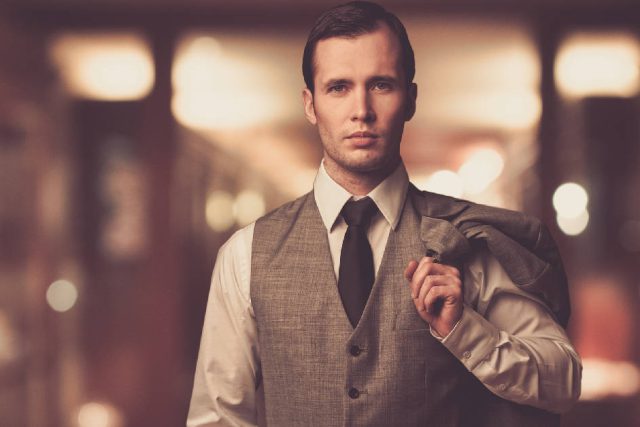
Blazers and jackets: Shoulder seam at the shoulder edge. When fastened, no pulling across the chest. Sleeve length lets about a half inch of shirt cuff show below the jacket sleeve. The jacket hem should reach roughly to your knuckles. A slight waist suppression looks sharper than a boxy, straight silhouette.
Sizes can change over the years, so re-measure before buying tailoring. The suit size calculator and shirt size calculator turn a few measurements into the size to order.
Trousers and jeans: Sit at the natural waist, not the hip. A clean break at the shoe: a slight fold where the trouser hem meets the top of the shoe. No pooling fabric. No inch of ankle showing unless you’re deliberately cropping them.
When to tailor: If ready-to-wear fits your shoulders but not your chest, or fits your thighs but bunches at the waist, tailor it. A good tailor can take in the sides of a shirt, shorten sleeves, taper trouser legs, and take in the waist of jeans. These alterations are not expensive and make a significant difference.
What to avoid: Roomier fits that made sense at 25 often just look baggy now. Clothes do not need to be tight, but they should follow the shape of the body without excess fabric.
Best Colors and Fabrics for Older Men
Colors that work across occasions: Navy, charcoal, mid-grey, white, cream, stone, khaki, light blue, olive, burgundy, brown. These mix easily and rarely look out of place.
Colors to be careful with: Bright, saturated colors and loud patterns take more confidence and skill to wear as you get older. Some color works well: a burgundy polo with grey chinos is easy to wear. Neon, clashing prints and heavy color-blocking usually aren’t.
Fabrics worth spending on: Wool, cotton, linen, leather, suede, and merino knit. These look better, hold their shape longer, and feel better. Cheap synthetic blends often go shiny, pill, or lose shape within a season.
Fabrics to avoid: Very thin or clingy fabrics show up badly on most body types. Cheap polyester goes shiny under light. Thin cotton tees in white often become translucent. Spend more on basics. They’re worn more and noticed more.
Fabric by season: Linen and lightweight cotton in summer. Flannel, heavy cotton, and wool in autumn and winter. Merino knitwear is worth investing in. It works across seasons, doesn’t wrinkle, and wears well under a blazer or on its own.
What Are Good Casual Outfits for Older Men?
Casual does not mean sloppy. The goal is relaxed but considered.
Weekend default: Dark straight-leg jeans + plain white or navy Oxford shirt (untucked) + suede chukka boots or clean leather sneakers. This is low-effort and looks intentional.
Casual with a layer: Dark jeans + grey or navy polo + unstructured navy blazer + brown leather loafers. The blazer immediately dresses the casual pieces up without looking overdone. Wear the blazer unstructured: soft shoulders, no lining.
Smart casual weekend: Stone or khaki chinos + light blue Oxford shirt (half-tucked or clean untuck) + suede bomber or leather field jacket + brown leather loafers or suede chukkas. Works for a lunch, a visit, or anywhere that isn’t formal but isn’t the gym.
Cold weather casual: Dark jeans + crew neck wool sweater in navy, grey, or burgundy + Harrington or bomber jacket + Chelsea boots. Layer a collared shirt under the sweater if you want a collar visible. More bomber jacket options in the bomber jacket guide.
Summer casual: Khaki shorts + plain polo in white, navy, or stone + clean leather trainers or loafers. Keep the polo fitted. More summer outfit formulas in the men’s summer fashion guide.
Smart Casual Outfits for Men Over 50
Smart casual is the most useful dressing level for men over 40 and 50. It covers most dinners, office environments, events, and social occasions.
The go-to combination: Navy or charcoal unstructured blazer + white or light blue Oxford shirt (tucked) + grey or khaki chinos + brown leather loafers or Derby shoes. Clean, reliable, and appropriate for almost anything. The smart casual dress code guide gives a more detailed breakdown of how to calibrate this for different settings.
With a turtleneck: Black or grey roll neck + slim dark jeans or straight charcoal trousers + leather Chelsea boots. No blazer needed. Good for dinners or evening events where you want to look sharp without dressing formally.
Business-adjacent: Grey or charcoal trousers + navy blazer + white dress shirt (tucked) + brown Derby shoes. Add a tie if the situation calls for it. Remove the tie and leave the shirt collar open for smart casual. Same outfit, different level.
With texture: Brown or camel tweed sport coat + blue Oxford shirt + dark jeans + suede desert boots. The tweed adds character without requiring anything loud.
What to Wear in Your 40s, 50s, 60s, and 70s
The broad principles are the same across these decades. The differences are mostly in energy level, occasion mix, and how much you want to maintain.
In your 40s: The wardrobe has the most range. You can wear a slim-cut suit to work and switch to dark jeans and a bomber for the weekend without either looking out of place. Fit matters increasingly. Invest in one good suit and one navy blazer. Get both properly fitted. Build casual outfits around dark jeans, chinos, and clean shoes. Navy blazer + dark jeans + Oxford shirt + Derby shoes covers most situations.
In your 50s: The focus shifts toward reliability. Smart casual becomes your most-used register. Invest in better fabrics: a merino knit, a wool blazer, quality leather shoes. Dark jeans still work; make sure the cut is straight or slim-straight, not skinny. A blazer with chinos and loafers is the most useful combination you own. Plaid or tweed sport coats in brown or olive add variety without effort.
In your 60s: Comfort and practicality matter more, and that is not a style problem. A well-fitting suit in grey or navy still looks excellent. Unstructured blazers are more comfortable than structured ones and look just as good in most situations. Shoes with leather soles can be replaced with a rubber sole or cushioned insole for comfort without changing how they look. Stick to classic shapes: straight-leg trousers, unstructured blazers, simple shirts. Avoid very current trends.
In your 70s: The wardrobe narrows to what you actually reach for. A Harrington jacket, a couple of good blazers, straight trousers, clean leather shoes, and a few well-fitting shirts covers most occasions. Classic pieces (corduroy trousers, a tweed sport coat, a polo shirt) hold up well and require no trend-chasing. Double denim can work if the shades are clearly different and the fits are clean. Keep accessories minimal and quality-focused.
Best Shoes for Older Men
Brown leather loafers: The most useful shoe across this age group. Penny loafers, tassel loafers. Works for casual, smart casual, and dressy occasions. Easier to get on and off than laces.
Suede chukka boots: Two eyelet, ankle-height. Works with dark jeans and chinos for casual and smart casual. Sand or tan suede is the most versatile color.
Derby shoes in tan or brown: For smarter occasions. More comfortable than Oxfords because of the open lacing. Works with dress trousers and blazers.
Chelsea boots: For those who wear them comfortably. Leather Chelsea boots in dark brown or black work with jeans, chinos, and dress trousers. A good all-season smart shoe.
Clean minimalist sneakers: Not chunky trainers, not heavily branded. A clean leather or suede sneaker in white or grey works for genuinely casual occasions: grocery shopping, travel, weekends. Keep them clean.
What to avoid: Very chunky or heavily branded trainers. Sports sandals with trousers. Flip-flops beyond the beach or pool. Heavily worn or unpolished shoes: dirty soles and scuffed uppers drag down any outfit.
Keep leather shoes polished. Suede should be brushed clean and treated against water. Good shoes last years if maintained. Bad shoe care wastes the investment.
Style Mistakes Older Men Should Avoid
Clothes that are too big: The most common mistake. A large shirt doesn’t hide weight. It adds visual bulk. Get things properly fitted.
Distressed or skinny jeans: Distressed denim reads young in a way that doesn’t work for most men over 45. Skinny jeans require a specific body type and a specific aesthetic to pull off. Straight or slim-straight is the safer choice.
Loud logos and heavy branding: A logo across the chest reads as trying to borrow someone else’s identity. Plain or discreet branding is always the more confident choice.
Very bright colors and neon: They draw attention to the wrong things. Burgundy, olive, and navy are easier to use and more reliable. Save bold colors for one piece per outfit at most.
Graphic tees as a main piece: A plain T-shirt under a jacket works for casual days. A graphic tee as the centerpiece of an outfit rarely does, and it never works for smart casual.
Cheap fabrics: Thin polyester shirts, shiny synthetic trousers, and pale imitation leather all show up badly in photographs and in person. Buy fewer pieces in better fabric.
Poor shoe maintenance: Scuffed shoes are visible from a distance. A pair of polish and a brush takes five minutes and makes a significant difference. If the shoes are beyond cleaning, replace them.
Colorful or novelty socks as a “personality” add: Fine occasionally, but it reads as a style cliché for men in this age group. A plain navy, grey, or brown sock is almost always better.
Baseball caps in non-casual settings: A baseball cap is always casual. Wearing one to a dinner or social event reads as not having thought about what you’re wearing.
FAQs
What is the best style for older men?
The best style for older men is classic and well fitted: straight-leg trousers or dark jeans, Oxford shirts, polos and merino knits in navy, grey, olive and other muted colors, a soft unstructured blazer, and clean leather shoes or boots. Fit matters more than any single piece.
How should a man over 50 dress casually?
Dark straight-leg jeans or khaki chinos, a plain polo or Oxford shirt, and suede chukkas or clean leather shoes. Add an unstructured blazer or casual jacket if the occasion calls for it. Keep colors muted. The goal is relaxed but considered: not sloppy, not overdressed.
Can older men wear jeans?
Yes. Dark slim-straight or straight-leg jeans work well for men at any age. Avoid skinny cuts and heavy distressing. Darker washes are more versatile and easier to dress up with a blazer or smart shoes.
Should older men wear sneakers?
Yes, in genuinely casual contexts. A clean, minimal leather or suede sneaker works for weekends, travel, and everyday wear. Avoid heavily branded trainers or chunky athletic shoes in any setting that isn’t sport or exercise. The shoe needs to match the occasion.
What colors look best on older men?
Navy, grey, white, stone, khaki, light blue, olive, burgundy, and brown. These are easy to mix, work across occasions, and don’t date. Very bright or saturated colors take more skill to wear as you get older. Use them sparingly and as one element of the outfit, not several.
What should older men avoid wearing?
Clothes that are too large, skinny or distressed jeans, loud logos, cheap fabrics, badly maintained shoes, and neon or heavily saturated colors as the main event. The goal is not youth. It’s looking like you know what you’re doing.
How can older men look stylish without trying too hard?
Keep it simple. Three well-fitting pieces in neutral colors with clean shoes looks better than five pieces in different colors and patterns that don’t connect. A navy blazer, grey chinos, white shirt, and brown loafers is a complete, reliable outfit. Start there and adjust.